1. Purpose & Scope
This guide provides basic fire safety awareness and emergency response procedures for ARATCO camp staff. The objective is to protect workers, property, and camp facilities by ensuring that staff understand fire risks and the correct actions during emergencies.
As dedicated service providers, ARATCO staff are committed to ensuring a highly secure, comfortable, and hazard-free environment. We take pride in serving and protecting our guests and contractors' employees across all our large-scale accommodation facilities. Safety is our ultimate priority.
Fire safety procedures must comply with Saudi Civil Defense regulations and national safety standards.

2. Common Fire Risks in Labor Camps
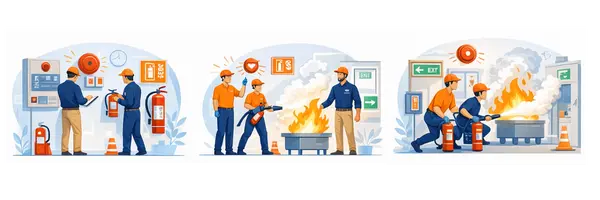
⚡ Electrical Hazards
- Overloaded multi-plug extension cords.
- Frayed, exposed, or damaged wiring.
- Leaving high-wattage appliances plugged in unattended.
- Improper use of space heaters in bedrooms.
🍳 Kitchen & Cooking
- Unattended cooking stations or stoves.
- Grease buildup in exhaust hoods and ducts.
- Improper storage of flammable cooking oils.
- Unauthorized cooking equipment in dormitories.
🚬 Unauthorized Smoking
- Smoking in bedrooms or non-designated areas.
- Improper disposal of cigarette butts.
- Smoking near flammable storage or gas cylinders.
✅ 3. Fire Prevention Rules
-
✓
Clear Pathways: Keep all corridors, stairwells, and emergency exits clear of obstructions at all times. Never block a fire door or prop it open.
-
✓
Safe Storage: Store flammable liquids and chemicals in approved, clearly labeled containers, strictly inside designated hazardous material storage units.
-
✓
Cooking Restrictions: Cooking inside accommodation rooms is strictly prohibited. Use only the designated camp kitchens provided.
-
✓
Electrical Safety: Report any sparking, buzzing, or burning smells from electrical outlets immediately to the maintenance team. Do not attempt DIY repairs.
4. Types of Fire Extinguishers
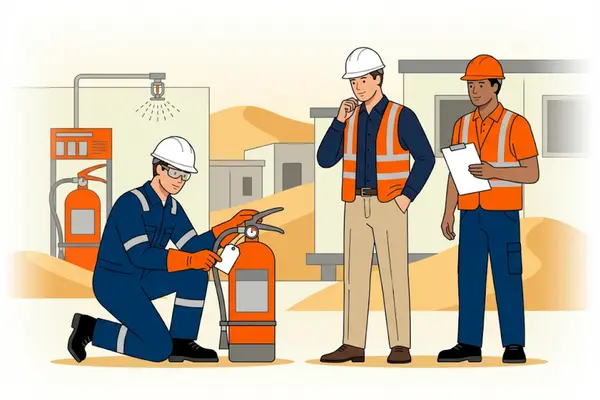
Using the correct fire extinguisher is crucial. Using the wrong type can make the fire worse (e.g., using water on an electrical or grease fire).
CO₂ Extinguisher
Best for electrical equipment fires and server rooms. Leaves no residue.
Dry Powder
Multi-purpose. Safe for electrical, flammable liquids, and gas fires.
Foam Extinguisher
Best for flammable liquids (petrol, oil). Do NOT use on electrical fires.
Water Extinguisher
For solid combustibles (wood, paper). Do NOT use on electrical or oil fires.
The P.A.S.S. Method
Only attempt to extinguish a small fire if it is safe to do so. If the fire is spreading, evacuate immediately.
7. Emergency Fire Response (R.A.C.E.)
If you discover a fire or hear the fire alarm, memorize and execute the R.A.C.E. procedure immediately:
R - RESCUE
Remove anyone in immediate danger, if safe to do so. Do not put yourself at risk.
A - ALARM
Activate the nearest fire alarm pull station. Call Civil Defense at 911 or 998.
C - CONFINE
Close all doors and windows behind you as you leave the area to slow the spread of smoke.
E - EVACUATE
Leave the building immediately using the nearest marked emergency exit. No elevators.
🏃 8. Evacuation Procedures
During evacuation:
- Remain calm and follow instructions from Fire Wardens.
- Use emergency exits and stairways. Follow the illuminated green signs.
- Do not use elevators under any circumstances.
- Assist injured, pregnant, or disabled persons.
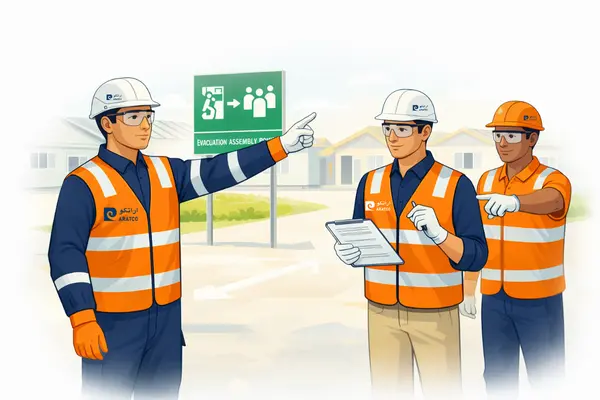
- Gather at the designated Assembly Point outside the camp perimeter.
- Muster Roll: Wait at the Assembly Point until the Camp Boss or Fire Warden conducts a headcount. Do not re-enter the building until the "All Clear" is given by authorities.
📋 Daily Fire Safety Checklist
Camp administrators and maintenance staff should use this checklist to ensure daily compliance across all operational areas: